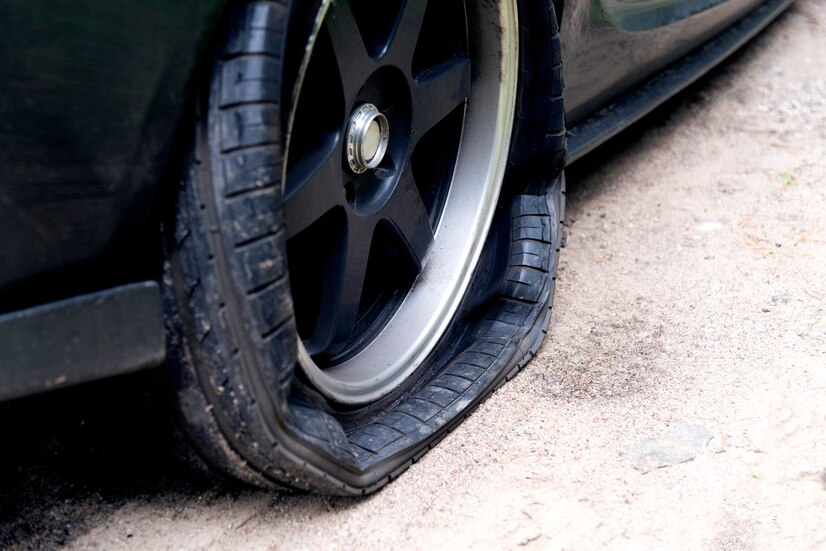
What should I do if I get a flat tyre? Knowing how to respond quickly and safely can make a flat tyre a minor inconvenience instead of a major disruption. Whether you’re on a busy highway or parked on a quiet road, having a step-by-step guide helps you stay calm and take the right action. This guide from Frontier Tyres will walk you through everything you need to know to deal with a flat tyre like a pro.
Stay Calm and Assess the Situation
A flat tyre can happen to anyone, at any time. The first and most important step is to stay calm and assess your surroundings.
If you’re driving when the tyre goes flat, you may notice the following signs:
- A sudden drop in speed
- Difficulty steering
- A loud flapping noise
- A strong pull to one side
When this happens, take your foot off the accelerator, avoid slamming on the brakes, and gently steer the vehicle to a safe location – preferably a flat, straight stretch of road with a wide shoulder. Once safely stopped, switch on your hazard lights to alert other drivers.
Safety should always be your priority, so make sure you’re well away from traffic and that your car is as visible as possible.
Gather Your Tools and Prepare
Before changing the tyre, ensure you have all the necessary equipment. Most vehicles come with a basic toolkit, but it’s good to regularly check that everything is in place.
Here’s what you’ll need:
- Spare tyre (check it’s properly inflated)
- Jack
- Wheel wrench
- Reflective triangle or warning cone
- Gloves (optional but helpful)
- Tyre pressure gauge (to check your spare)
Once you’ve gathered your tools, place the reflective triangle at least 3 metres behind your vehicle to warn oncoming traffic. Put on your hazard vest if you have one, and ensure your handbrake is engaged.
This preparation not only keeps you safe but also speeds up the process of replacing the tyre.
Loosen the Wheel Nuts
With your vehicle safely parked and your tools ready, it’s time to loosen the wheel nuts. This should be done before lifting the car with the jack.
Follow these steps:
- Use the wrench to turn each wheel nut anti-clockwise
- Loosen them enough that they can be turned by hand (but don’t remove them completely)
- If the nuts are too tight, try standing on the wrench for extra leverage
Loosening the nuts while the car is still on the ground helps prevent the wheel from spinning while you apply pressure. This is a key safety step and will save you effort once the vehicle is raised.
Lift the Vehicle with the Jack
Now that your nuts are loosened, it’s time to raise your car.
Steps to safely jack your car:
- Locate the jacking point closest to the flat tyre (refer to your owner’s manual)
- Position the jack correctly under the vehicle
- Slowly raise the car until the flat tyre is around 10 cm off the ground
Make sure the car is on stable, level ground before lifting. Never place any part of your body under the vehicle while it’s jacked up. This step requires patience – rushing can result in mistakes that could lead to injury or damage to your vehicle.
Remove the Flat Tyre and Fit the Spare
With the car raised and the wheel nuts loosened, you can now remove the flat tyre.
To do this:
- Fully unscrew and remove the wheel nuts
- Pull the tyre straight off the hub
- Carefully place it flat on the ground to avoid it rolling away
- Mount the spare tyre onto the hub
- Replace and hand-tighten the wheel nuts
Ensure the spare tyre is positioned correctly and sits flush against the wheel hub. If it’s not aligned properly, it could cause problems once you start driving again.
Tighten the Nuts and Lower the Car
Once the spare tyre is fitted, it’s time to finish the job.
Follow these steps:
- Tighten the wheel nuts as much as you can by hand
- Slowly lower the car using the jack until the tyre touches the ground
- Once fully lowered, use the wrench to securely tighten the nuts in a crisscross pattern (e.g., top-left, bottom-right)
This tightening pattern ensures even pressure across the wheel. After tightening, double-check all nuts to make sure they’re secure. If they feel loose, give them another turn. A loose wheel can be extremely dangerous.
Check Tyre Pressure and Drive Cautiously
After successfully changing the tyre, check the spare’s pressure using a tyre pressure gauge. Spare tyres – especially space savers – are often inflated to a higher PSI than regular tyres. Refer to your car manual or the label inside the driver’s door for recommended pressure levels.
If the pressure is low:
- Drive cautiously to the nearest service station
- Keep your speed below 80km/h
- Avoid long distances on a space saver spare
This is also the ideal time to head straight to your nearest Frontier Tyres branch for a full tyre replacement or repair. Spare tyres are only temporary and not designed for prolonged use.
Visit a Tyre Professional ASAP
Changing a tyre gets you back on the road, but it’s not the end of the journey. You should always have your vehicle checked by a professional to:
- Inspect the damaged tyre
- Balance and align your wheels
- Replace the spare with a full-size tyre
- Ensure no underlying damage occurred to the suspension or axle
Driving on a temporary spare for too long can increase the risk of further issues. A visit to Frontier Tyres means peace of mind and a safer journey ahead.
Contact us today to book a tyre check or replacement: https://frontiertyres.co.za/contact-us
Visit our Facebook for updates, tips, and tyre promotions:
https://www.facebook.com/frontiertyressa