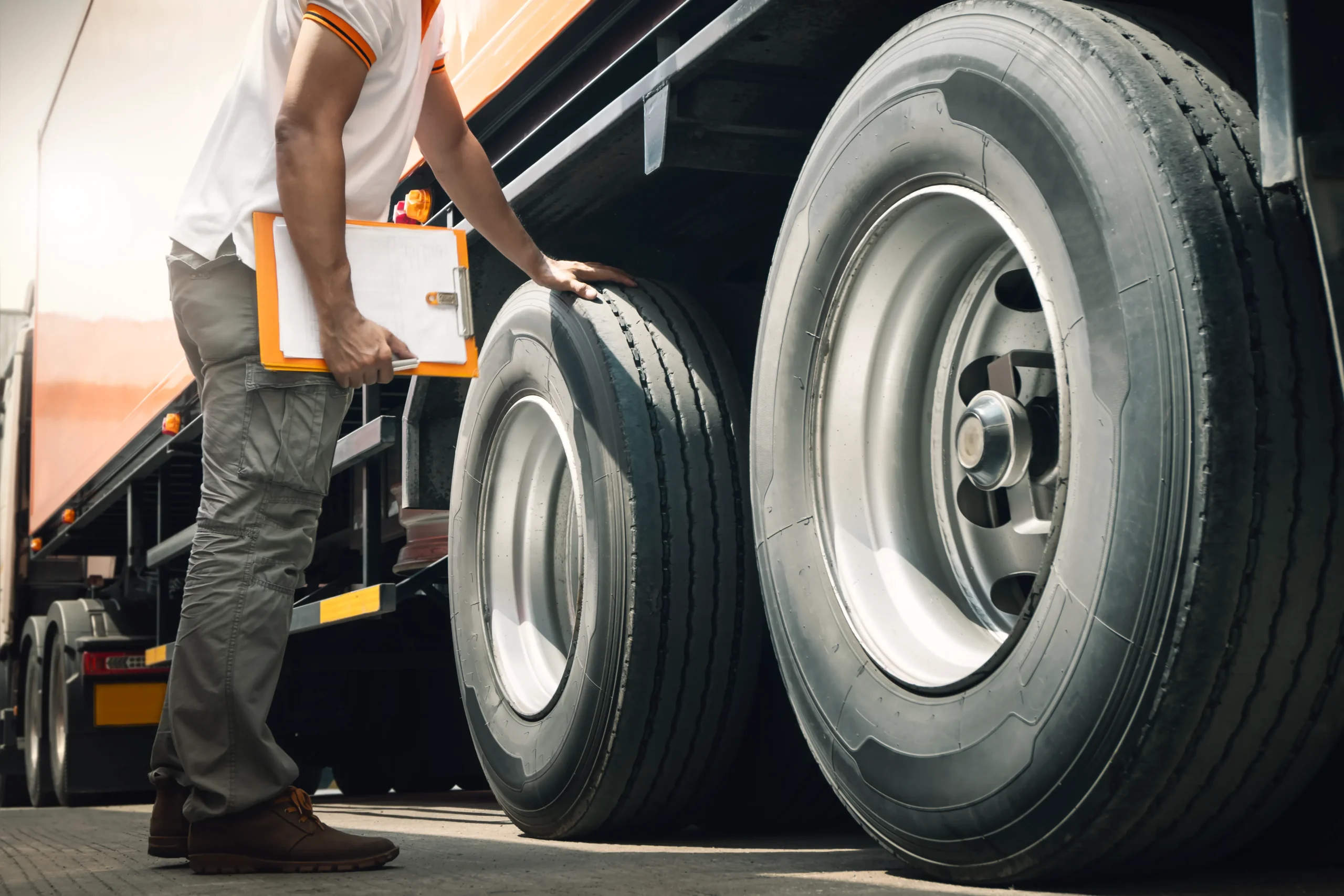
What are some fleet tyre care best practices? Tyres are one of the most critical components of fleet management, directly impacting safety, efficiency and running costs. Whether you’re managing a small delivery fleet or a large logistics operation, proper tyre maintenance can save thousands in the long run and reduce downtime significantly.
Tyres endure the full weight of every journey and face wear from long distances, rough roads and varying loads. When they’re not properly cared for, the consequences range from poor fuel economy to serious accidents. The right tyre care strategy doesn’t just extend tyre life – it keeps your vehicles roadworthy, your drivers safe, and your business operating smoothly.
In this guide, we’ll explore the best practices for tyre care and maintenance within fleet management, focusing on cost-effective strategies and proactive measures that benefit South African fleet operators. With expert tips from Frontier Tyres, you’ll be equipped to make smart, long-term decisions for your fleet.
Why tyre maintenance is critical for fleets
Tyres play a bigger role in fleet management than many realise. They influence everything from operational safety to fuel consumption and vehicle performance. Neglecting tyre maintenance leads to:
- Increased risk of blowouts and accidents
- Unnecessary fuel consumption
- Shortened tyre lifespan
- Higher vehicle maintenance costs
- Delays in delivery schedules
For South African fleet managers, road conditions, temperature fluctuations and heavy vehicle usage make regular inspections essential. The right maintenance plan helps prevent downtime, keeps drivers safe and reduces fleet expenses over time. Tyres that are properly aligned, inflated and rotated wear more evenly and last longer, reducing your need for replacements.
By incorporating tyre management into your broader fleet strategy, you protect your investment while also contributing to safer roads across the country.
Conduct regular tyre inspections
Routine inspections are your first line of defence against premature tyre failure. Fleet managers should implement a regular schedule to check each vehicle’s tyres before, during and after trips.
Here’s what to look for during tyre checks:
- Tyre pressure: Incorrect pressure affects grip and increases wear.
- Tread depth: South African law requires a minimum tread depth of 1mm for light vehicles, but replacing tyres at 3mm is safer.
- Visual damage: Look for cuts, punctures, cracks or bulges.
- Uneven wear: This can signal alignment or suspension issues.
- Valve condition: Damaged valves can cause air leaks.
Daily checks can be done by drivers, while more detailed inspections should be carried out weekly by maintenance staff. Using a tyre management system or app can help schedule and log these checks, ensuring no tyre is overlooked.
Consistent inspections are a low-cost, high-value step towards better fleet performance and tyre longevity.
Prioritise correct tyre pressure
Maintaining the correct tyre pressure is one of the simplest but most effective tyre care practices. Both overinflation and underinflation can cause significant issues.
- Underinflated tyres: Increase rolling resistance, reduce fuel efficiency and cause heat build-up, which may lead to blowouts.
- Overinflated tyres: Result in less contact with the road, leading to poor handling and faster centre wear.
Use a reliable tyre pressure gauge and refer to the manufacturer’s recommendations for optimal pressure levels. Temperature can also affect pressure, so check tyres when they’re cold for the most accurate readings.
To help manage this across multiple vehicles, consider:
- Installing tyre pressure monitoring systems (TPMS)
- Training drivers to check pressure before and after trips
- Adding tyre pressure checks to your fleet maintenance SOPs
Correct tyre pressure not only boosts performance but also extends tyre life, reducing your replacement costs.
Rotate tyres to ensure even wear
Tyre rotation is another essential practice that many fleets overlook. Rotating tyres at regular intervals ensures they wear evenly, improving handling and extending tyre life.
Fleet vehicles, especially those with front-wheel or rear-wheel drive, experience uneven tyre wear due to varying load distribution and road contact. Without rotation, some tyres wear out faster than others, leading to:
- Imbalanced vehicle handling
- Reduced fuel efficiency
- The need for premature replacements
Best practice for tyre rotation includes:
- Rotating every 10,000 km or during routine servicing
- Following the vehicle manufacturer’s recommended rotation pattern
- Checking for unusual wear patterns that may require alignment
For fleets operating under heavy loads or rough conditions, more frequent rotations may be necessary. A planned rotation schedule tailored to each vehicle type is the best way to maximise the value of every tyre in your fleet.
Balance and align for safety and performance
Poor alignment and unbalanced tyres don’t just affect comfort – they’re a safety hazard and a drain on your operating budget. If your fleet vehicles are veering to one side or your drivers report vibration at certain speeds, it’s time to book a professional wheel alignment and balancing.
Tyre alignment refers to the angle of the wheels in relation to the road. Poor alignment can cause:
- Uneven or rapid tyre wear
- Difficulty steering
- Increased fuel consumption
Wheel balancing ensures that weight is evenly distributed across the tyre and wheel assembly. Unbalanced wheels lead to:
- Vibrations
- Suspension wear
- Premature tyre damage
Make alignment and balancing part of your regular fleet maintenance – ideally, every 20,000 to 30,000 km or whenever new tyres are fitted.
Partnering with a trusted tyre service provider like Frontier Tyres ensures your alignment and balancing needs are handled professionally, keeping your fleet safer and more efficient.
Invest in quality tyres and replacements
Not all tyres are created equal, and for fleet vehicles covering thousands of kilometres monthly, quality matters. Investing in the right tyres for your vehicle type, road conditions and load requirements makes a noticeable difference in performance and safety.
When choosing tyres, consider:
- Tyre load rating: Ensure tyres can support your vehicle’s maximum load.
- Tyre type: Long-haul, regional, off-road and all-season tyres serve different purposes.
- Brand reliability: Stick with trusted brands that meet South African road regulations.
- Warranty and support: Good tyres come with guarantees and after sales support.
Avoid cutting costs on tyres – it may save you now but cost you more in the long run through breakdowns, accidents or higher fuel consumption. Keeping spares on hand and tracking tyre replacement history helps you stay ahead of wear issues.
Frontier Tyres can assist with selecting and supplying the best tyres for your fleet needs, giving you both peace of mind and long-term value.
Train your drivers on tyre awareness
Your drivers are on the frontline when it comes to tyre safety. With proper training, they can help identify issues early and practise better driving habits that preserve tyre health.
Key areas to include in tyre training sessions:
- How to visually inspect tyres before and after trips
- Understanding the impact of harsh braking, cornering and speeding on tyre wear
- How to detect alignment or pressure issues while driving
- Importance of reporting tyre concerns immediately
By making tyre care part of driver onboarding and ongoing training, you empower your team to play an active role in fleet maintenance.
Creating a tyre-awareness culture within your fleet also improves accountability and encourages proactive maintenance reporting.
Contact us to discuss tyre care solutions for your fleet: https://frontiertyres.co.za/contact-us/
Visit our Facebook to stay updated with tyre tips and services: https://www.facebook.com/frontiertyressa